



 September 17, 2026 11:42 am
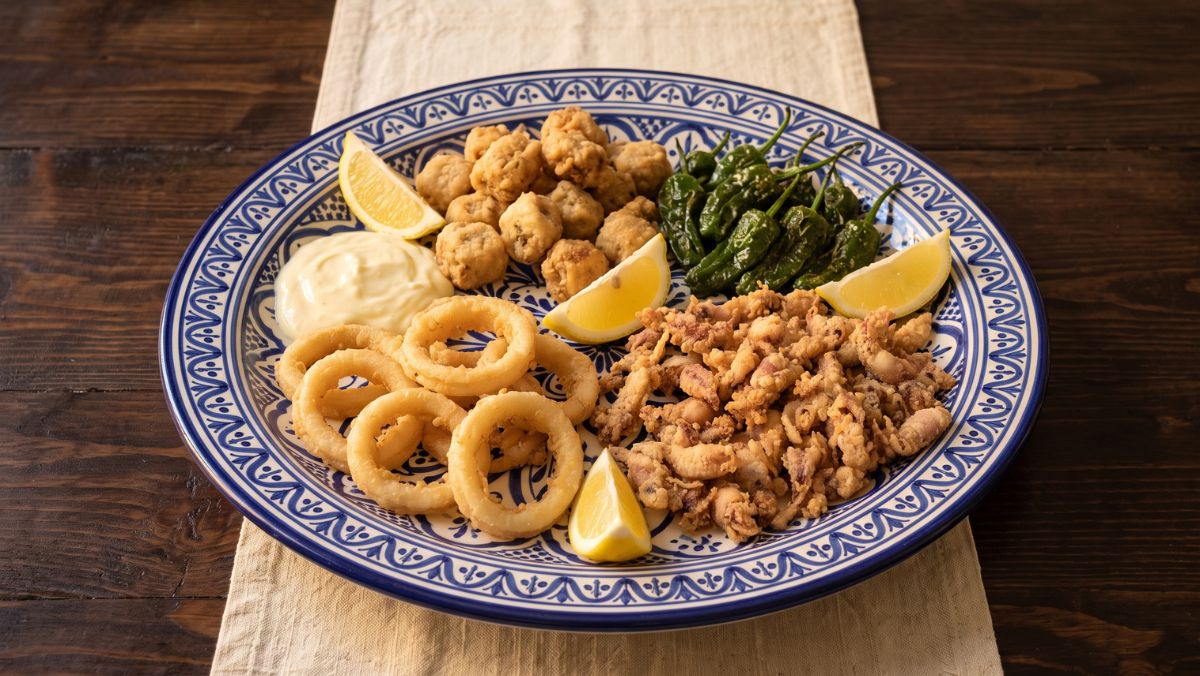
When someone in Jerez tells you they’ve eaten fried fish, they’re not just talking about a dish: they’re talking about a ritual. The Jerez-style frying is one of the hallmarks of Cadiz cuisine and one of those traditions that perfectly encapsulates the soul of the south: fresh produce, artisanal technique, and a leisurely after-meal chat over glasses of wine and laughter. We’ll tell you what it is, the secret of the batter, the undisputed stars of the menu, and how to experience it in Jerez this summer.
What is Jerez-style frying or Andalusian fried fish?
The Jerez-style frying —also known as Andalusian fried fish— is the traditional way of preparing small, fresh fish and seafood: lightly battered in flour, fried in hot olive oil and served immediately, crispy on the outside and juicy on the inside. It can be ordered in a tavern, in a Jerez tabanco, in a paper cone to take away or at a table with a tablecloth. It doesn’t matter: the essence is the same.
Its origin is much older than it seems. The technique arrived in Gadir —the current Cadiz— with the Phoenicians about 3,000 years ago, who already fried small fish in olive oil. The Romans incorporated it into their recipe book and the tradition has practically remained intact until today. Although all of Andalusia claims it as its own, Cadiz is the historical epicenter and Jerez, due to its proximity to the fishing ports of Sanlúcar and El Puerto, is one of the capitals of fried fish in the interior of the province.
The secret of good batter: the technique that changes everything
Here is the big question everyone asks: how is authentic Andalusian fried fish made? The secret is not in a hidden ingredient, but in an extremely precise technique respected for generations. These are the five non-negotiable principles:
- Half wheat flour, half chickpea flour. This is the great Andalusian “trick”. Chickpea flour gives a more intense golden color and a slightly toasted flavor; wheat flour provides the crunchiness. The mixture —in equal parts— is what gives the batter its iconic texture.
- No egg. Unlike other batters, egg is not used in Jerez-style frying. The natural moisture of the fish makes the flour stick. Adding egg makes it clumpy and ruins the texture.
- Fish should be very cold and dry. Ideally, the fish should drain for a few minutes before being battered. Some fryers even keep it in a cold chamber until the last moment: the contrast with the oil helps to instantly form a golden crust.
- Extra virgin olive oil at 180 ºC. No more, no less. If it’s colder, the fish absorbs fat and becomes soft; if it’s hotter, it burns on the outside and remains raw on the inside. A good fryer from Jerez knows that “the oil has to whistle” when it receives the fish.
- Quick draining and immediate service. As soon as it comes out of the oil, it goes to absorbent paper and to the table. It is not covered, stacked, or reheated: the texture of fried fish dies if it is left to rest for too long.
A good batter is recognized as soon as you bite into it: it crunches but not excessively, it lets you see the fish and does not hide it under thick layers, and it does not leave a greasy trace on the palate. This is the standard that the best fryers in Jerez have been raising for years.
The stars of Jerez frying
At a good Jerez frying table, none of these pieces are missing. Each one has its character, its season, and its optimal way of being enjoyed.
Cazón en adobo
The undisputed king. Pieces of cazón (a variety of shark from Cadiz waters) marinated for hours in a marinade of Jerez vinegar, garlic, paprika, oregano, and cumin. Then, they are battered in flour and fried until golden and crispy. The vinegar is what gives it its sharp and unmistakable flavor.
Pescaílla
The offspring of hake. Very small, it is served whole —often biting its tail in the shape of a ring— and fried until completely crispy. It is eaten with the hands, in one bite. An absolute classic of Cadiz fryers.
Boquerones
Another essential. Small, from the bay, they are passed through flour and fried for a few seconds. They are served in a bunch, eaten whole with the hands and are the perfect start to any fried dinner.
Chocos
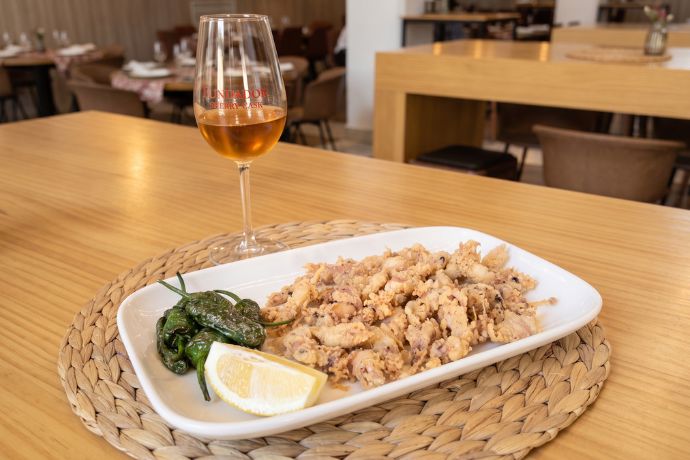
The cuttlefish from Cadiz, cut into strips and battered. Its tender texture contrasts with the crunchiness of the batter. Be careful not to over-fry them: the chocos dry out easily and lose all their taste.
Tortillitas de camarones
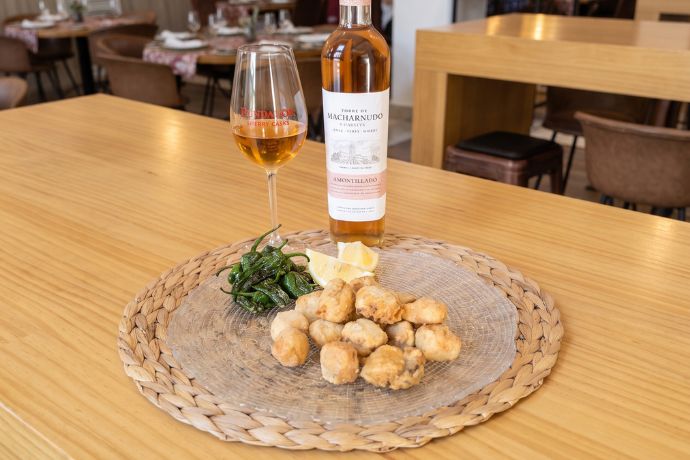
Perhaps the most unique and sophisticated preparation of Andalusian frying. Tiny shrimps —whole, with the head— mixed with a dough of wheat flour and chickpea flour, chopped spring onion, parsley and very cold water. They are fried by spoonfuls until they form a thin and lacy sheet. An absolute icon of Cadiz cuisine and, without dispute, the dream pairing with Fino.
Frying and after-dinner: the pairing that changes everything
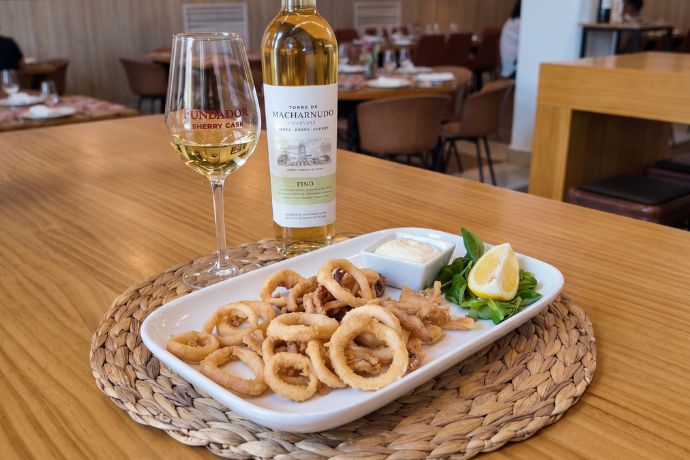
The Jerez frying is not understood without its liquid companions. It is here where the Marco de Jerez shows why it is one of the most complete gastronomic cultures in Europe. Our recommendations:
- Fino with anchovies, small fish and shrimp pancakes. The freshness and the salty touch of Fino clean the grease from the batter and enhance the pure taste of the fish.
- Amontillado with marinated dogfish. The oxidative and toasted notes of Amontillado dialogue with the vinegar of the marinade in a surprising way.
- Brandy de Jerez for after-dinner. When the frying ends and coffee and desserts arrive, a Brandy Fundador Supremo served at room temperature closes the meal with the elegance of aging in Jerez casks. It is the perfect after-dinner following a seafood table.
You can discover these pairings and many more in our article about where to eat in Jerez de la Frontera, where we review the best places and the combinations that never fail.
Frequently asked questions about Jerez frying
Why is chickpea flour used in fried fish?
Chickpea flour provides a more intense golden color, a slightly toasted flavor and a more airy texture. Combined with wheat flour in equal parts, it is the secret behind the iconic crunchiness of Andalusian frying.
What is the ideal oil temperature for frying fish?
180 ºC. Neither more, nor less. At this temperature the fish is instantly sealed, the batter browns without burning and the inside remains juicy. If the oil is colder, the fish absorbs fat; if it is hotter, it burns on the outside and remains raw on the inside.
Where to eat fried fish in Jerez?
Jerez has fry shops and classic bars with decades of history, tabancos with flamenco atmosphere and market cuisine restaurants where frying is the protagonist. If you don’t know where to eat in Jerez, in the historic center —around Consistorio Street, Plateros Square and Larga Street— concentrates a good part of the offer. Casa Fundador, in the heart of the oldest winery in Jerez, is one of the most complete options to accompany the fried food with the best wines and brandies of the house.
Where is fried fish typical?
The Andalusian fry is traditional throughout western Andalusia, but its epicenter is in Cadiz and its province. Jerez, although it is not a coastal city, is supplied with fresh fish from Sanlúcar and El Puerto de Santa María, and is an unavoidable gastronomic reference to discover it.
What is the difference between fried fish and frying?
In practice, they are synonyms. “Fried fish” is the popular and affectionate name by which the dish is known throughout Andalusia. “Frying” —or “Jerez frying”, “Cadiz frying”— refers to the same dish but usually denotes a more elaborate version, with several different species on the same tray.
Experience Jerez frying at Casa Fundador
If you want to discover Jerez frying in the best possible environment, Casa Fundador awaits you in the historic center of Jerez, inside the oldest winery in the city, with 300 years of history. Our kitchen fuses Andalusian tradition with seasonal proposals and a unique cocktail menu, with pairings designed to accompany each dish with the house wines and brandies.
And if you are looking for a different experience on weekends, don’t miss the Casa Fundador Sunday brunch: every Sunday from 11:30 a.m. to 1:30 p.m., with artisan toasts, fresh bowls, brioches, natural juices, special coffees and cocktails made with the best brandies of the house. A different way to live Sunday, extending the morning leisurely between the walls of a historic winery in Jerez.
Related entries
This post was written by Almudena Alonso
Comments are closed here.