



 May 21, 2026 11:03 am
Every spring, the coasts of Cadiz become the stage for a millenary ritual: the tuna ronqueo. An art that combines technique, culture and respect for the product, and which has turned the red tuna of almadraba into one of the great gastronomic ambassadors of Cadiz. In this article we tell you what it is, where it comes from, when it is celebrated, what its best cuts are and where you can experience it live this season.
What is the tuna ronqueo
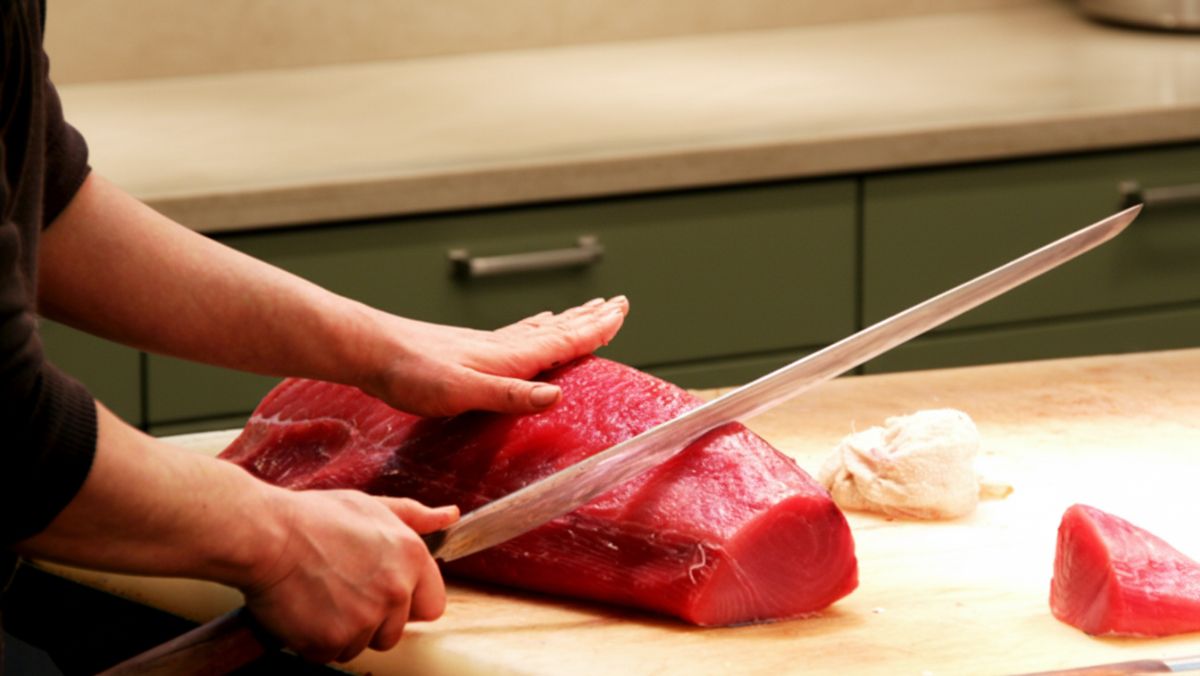
The tuna ronqueo is the traditional and artisanal disassembly of the red tuna caught in the almadrabas of Cadiz. It is not simply about cutting the fish: it is a surgical ritual that takes advantage of every part of the animal and allows obtaining, from a single specimen, up to 24 different pieces, each with its own properties, textures and culinary applications. And why is it called tuna ronqueo? The name has a sound origin: during the disassembly, the ronqueador’s knife rubs the fish’s spine and produces a dull sound, similar to a snore. Hence “ronqueo”. This subtlety also defines the skill of the trade: the sound indicates to the master that he is following the correct path of the cut, without wasting meat. That is, in essence, what the tuna ronqueo means: a trade that combines precision, tradition and deep knowledge of the product.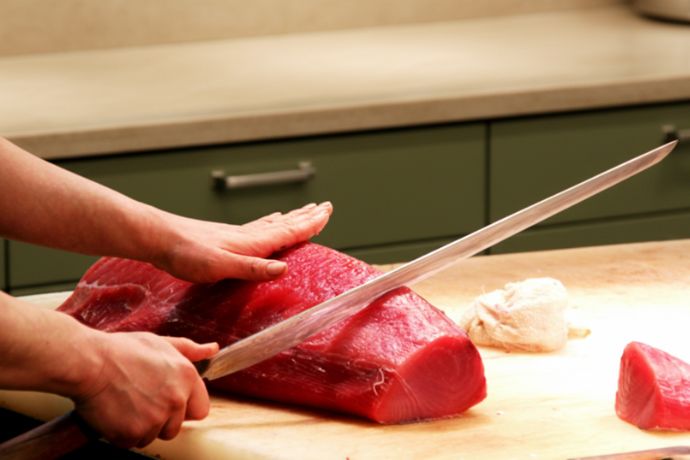
Origin and history of the tuna ronqueo
To understand the ronqueo, we have to go back thousands of years. The almadraba – the fishing technique that precedes the disassembly – originated over 3,000 years ago and was introduced to the coasts of Cadiz by Mediterranean cultures, possibly Phoenicians and Punics. The word almadraba comes from Andalusian Arabic “al-madraba”, which translates as “place where it is hit or fought”.This fishing system uses a maze of nets that intercepts the natural passage of red tuna during its migration from the Atlantic to the Mediterranean, where it goes to spawn. Once the specimens are captured in the levantá, they are transferred to land and the ronqueo is carried out. The technique, recognized by the International Commission for the Conservation of Atlantic Tunas (ICCAT) as one of the most sustainable fishing methods on the planet, is still practiced today in a very similar way to how it was done centuries ago.
When is the tuna ronqueo
The almadraba season —and therefore the ronqueo of the red tuna— is concentrated between the end of April and mid-June, taking advantage of the tuna’s passage through Cadiz waters at its optimal time of natural fat infiltration. The entire campaign is structured in three phases:
- Calamento (February to April): preparation and installation of the nets in the sea.
- Fishing (end of April to mid-June): days of levantá and captures.
- Leva (June to August): removal and collection of the nets.
The months of April and May are the heart of the season: when the live ronqueos open to the public, the tuna fairs and the greatest availability of fresh product in shops and restaurants are concentrated. In 2026, the Cadiz almadrabas have a quota to catch about 1,292 tons of wild red tuna.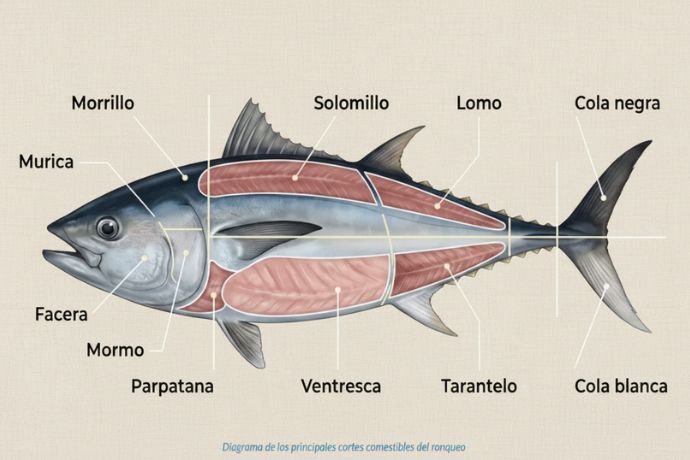
What are the best cuts of tuna
Knowing the parts of the tuna after the ronqueo is key to appreciating its gastronomy. These are the most valued cuts:
- Morrillo: upper area of the neck, intensely infiltrated with fat. One of the juiciest pieces. Ideal for grilling or barbecuing.
- Ventresca: the lower part of the tuna, equivalent to the “toro” of Japanese sushi. Unctuous and tasty, perfect both raw and confit.
- Tarantelo: interior cut close to the ventresca, with infiltrated fat and delicate flavor. Excellent for tartar, tataki or grilled.
- Toro: the fattest point of the tuna. The most coveted piece in Japanese cuisine and a true gastronomic jewel.
- Parpatana: the chin area, all nerve and collagen. Traditionally humble, today it is a star dish in haute cuisine, especially stewed or grilled.
- Sirloin and loin: the most noble lean cuts, perfect for tataki, smoked or sashimi.
- Mormo, contramormo, facera, unloaded and unloading: minor cuts that complete the integral use of the animal.
The philosophy is clear: everything from the tuna is used, just as it is done with the Iberian pig in Andalusian culture. Hence the affectionate nickname of the red tuna: “the Iberian pig of the sea”.
Tuna Carving Tools
Tuna carving is not done with just any knife. The master carver uses a specific set of tools:
- Cleaver or machete: wide and robust blade for the first cuts, separating the central spine of the animal.
- Carving knife: narrow, long and very sharp, designed to follow the natural lines of the muscle.
- Filleting knife: flexible, to extract loins and discharges with millimetric precision.
- Sharpening steel: sharpening tool to maintain the edge of the blades throughout the process.
Each tool has its time and its cut. Precision is essential: an adult tuna can exceed 200 kilos, and a bad cut means wasting very valuable meat.
Where to watch live tuna carving
If you want to know where to watch tuna carving this year, the province of Cádiz is the absolute epicenter. The four traditional tuna traps are located in Barbate, Zahara de los Atunes, Conil de la Frontera and Tarifa. In these municipalities, live carvings open to the public are concentrated, especially during the gastronomic fairs of the season. Some of the must-see events of the tuna carving in Cádiz are:
- Gastronomic Week of Tuna in Barbate (end of April to beginning of May).
- Tuna Route of Zahara de los Atunes and Conil (May).
- Tuna Fair of Chiclana (May).
- Month of Red Tuna from Almadraba in Chiclana (April 22 to May 31).
- Weekly carvings at the Gadira factory (Barbate), throughout the season.
In addition, more and more restaurants and wineries organize private carvings with paired dinner, taking the experience beyond the pure spectacle of the disassembly.
Tuna Carving at Casa Fundador
One of the most complete experiences to live the red tuna carving this 2026, along with the celebration of the Gastronomic Capital of Jerez, is held at Casa Fundador, in the heart of Jerez. An evening that combines the private visit to the historic wineries, the live carving by the master carvers of Gadira and a paired dinner on the terrace on May 22:
- 7:00 PM | Private visit to Bodegas Fundador to immerse yourself in the Jerez tradition.
- 8:00 PM | Live Ronqueo and appetizers with the cocktail «Magas by Fundador»: semi-mojama with tomato jam, warm brioche of morrillo with truffled mayonnaise, reinterpreted gilda and crispy tuna taco in lime and cilantro ceviche.
- 9:00 PM | Dinner with tasting menu paired on the terrace: tiradito with kimchi, sashimi-tataki-tartar, grilled ventresca and trifle with Harveys Bristol Cream.
Very limited places. All information and reservations on our page to enjoy the ronqueo with Fundador. A unique opportunity to celebrate the tuna season where tradition, wine and cuisine speak the same language.
Related entries
This post was written by Almudena Alonso
Comments are closed here.