



 July 20, 2026 2:20 pm
The sherry wines are a unique category in the world of wine: they are made in the Marco de Jerez, in the province of Cádiz, and are protected by the oldest Denomination of Origin in Spain, the DO Jerez-Xérès-Sherry, founded in 1933. Under this seal, six major types are grouped —Fino, Manzanilla, Amontillado, Oloroso, Palo Cortado and Cream—, each with its own character born from a breeding system that does not exist anywhere else in the world. We tell you what defines them and how they differ.
Characteristics of the DO Jerez-Xérès-Sherry
The DO Jerez-Xérès-Sherry geographically delimits the so-called Marco de Jerez, a wine triangle in the south of Cádiz formed by Jerez de la Frontera, El Puerto de Santa María and Sanlúcar de Barrameda. To this DO is added that of Manzanilla-Sanlúcar de Barrameda, which shares a Regulatory Council and defines a wine with its own identity.
Three factors make Jerez wines unique:
- Albariza soil. The types of soil of the sherry wines have a clear protagonist: the albariza. It is a white limestone rock, with more than 40% calcium carbonate, capable of retaining moisture in the subsoil and returning it to the vine during the driest months of the Andalusian summer. Some payments are a world reference for the excellence of their wines, like the historic Pago de Macharnudo, considered the oldest payment in Spain.
- Native grapes. The queen variety is Palomino Fino (more than 95% of the plantations), which gives dry wines. For natural sweet wines, Pedro Ximénez and Moscatel are used.
- Atlantic-Mediterranean climate. The Poniente (humid, from the Atlantic) and Levante (dry, from the interior) winds set the pace of aging and the appearance of the flor veil.
What type of wine is Sherry?
The sherry wine is a fortified generous wine: it is mainly made with Palomino Fino white grape, it is fully fermented and then fortified —that is, wine alcohol is added— to reach between 15% and 22% vol., depending on the type. This fortification does not seek sweetness, but to determine the path of subsequent aging.
The Regulatory Council officially recognizes three major families of sherry wine:
- Generous wines. Dry by definition (residual sugar < 5 g/l). This includes Fino, Manzanilla, Amontillado, Oloroso and Palo Cortado.
- Generous liquor wines. Assemblies or blends of generous wines with natural sweets. This family includes Pale Cream, Medium and Cream, a type of Sherry that mixes dry and sweet wines.
- Natural sweet wines. Made with very ripe Pedro Ximénez or Moscatel grapes or sun-dried.
How Sherry wines are aged
The type of aging of Sherry wines is what really defines them. They all share a dynamic and shared system with sherry brandy: the criaderas and soleras system.
In this method, the boots (barrels) are grouped in overlapping rows. The row closest to the ground—the solera—contains the oldest wine. When bottling, only a part is extracted, which is refilled with wine from the upper row (first criadera), and so on. The result: a wine without a vintage, always homogeneous, with the complexity of the oldest and the freshness of the youngest.
From there, the types of aging of Sherry wine are divided into two:
- Biological aging. Fortification to 15% vol. A flor veil —a layer of living yeasts— forms on the surface of the boot, which protects the wine from oxygen and gives it almond, salty and fresh notes. It is the type of maturation of Sherry wine characteristic of finos and manzanillas.
- Oxidative aging. Fortification to more than 17% vol. The veil does not appear or is removed. The wine evolves with direct contact with oxygen, gains color and develops toasted, nutty and woody notes.
Wines that exceed 20 or 30 years of aging receive the mentions VOS (Very Old Sherry) and VORS (Very Old Rare Sherry) respectively. They are authentic oenological treasures guarded by the Regulatory Council itself.
The 6 types of Sherry wines: know their own differences
These are the 6 types of Sherry wines —the so-called generous and generous liqueur wines— most representative of the DO:
Fino
Dry, pale and light wine. Exclusively biological aging under a veil of flor in Jerez or El Puerto de Santa María. Almond and pungent aromas, fresh and slightly salty mouth. It is served very cold (7-9 ºC) and pairs perfectly with Iberian ham, olives, seafood and fried fish.
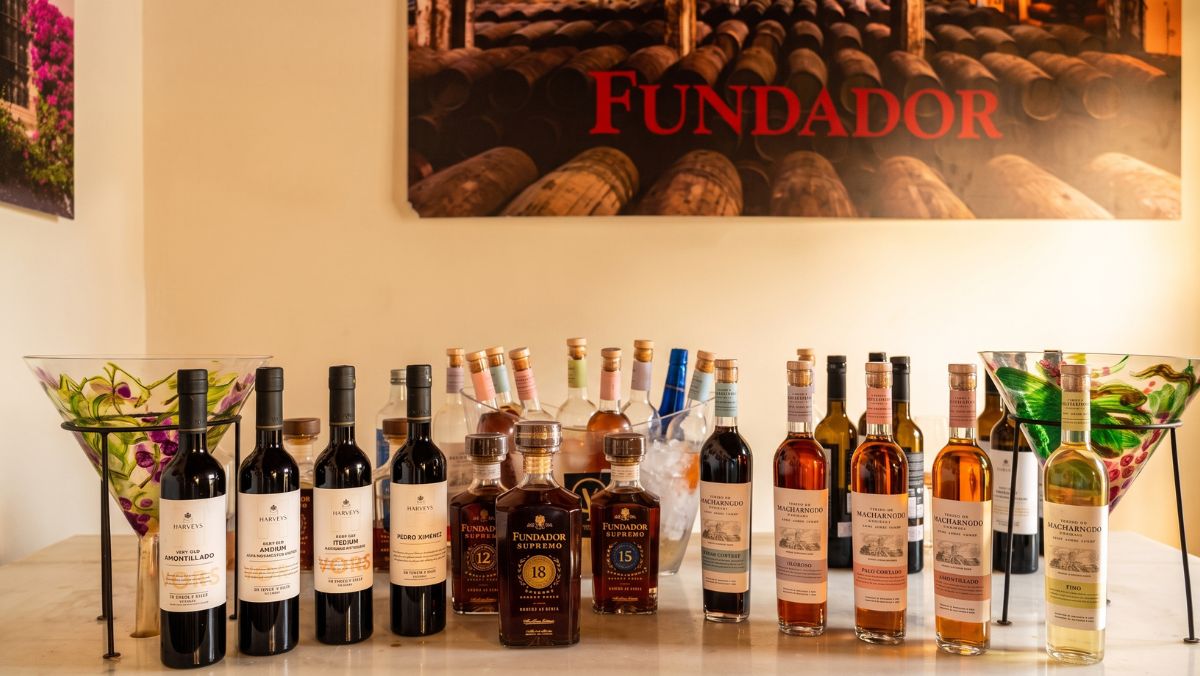
A great example within the Bodegas Fundador group is the Fino from Torre de Macharnudo, the premium range of Harveys made with grapes from the historic payment that gives it its name.
Manzanilla
Identical in composition to Fino but aged exclusively in Sanlúcar de Barrameda, next to the mouth of the Guadalquivir. Its marine saline microclimate is reflected in the glass: more saline nose, lighter and sharper mouth. It has its own DO (Manzanilla-Sanlúcar de Barrameda). Perfect with fried foods, appetizers and seafood.
Amontillado
It starts as Fino under a veil of flor and, when the flor disappears, it continues aging oxidatively. Double aging that gives an amber wine, complex, with memories of hazelnut, toasted and a certain salty tip. Ideal with broths, mushrooms, vegetable rice and cured cheeses. The Amontillado from Torre de Macharnudo is a great reference for this double aging.
Oloroso
Dry wine with exclusively oxidative aging from the beginning. Mahogany color, high graduation (17-22%), enveloping aromas of walnut, noble wood and spices. Powerful structure in the mouth. Ideal pairing: red meats, stews and game dishes. The Oloroso from Torre de Macharnudo reflects this complexity with the personality of the payment that gives it its name.
Palo Cortado
The most mysterious and rare of all. It is born as a wine that was going to be Fino, but when the flor breaks or disappears unexpectedly, it is decided to continue its aging in oxidative. It combines the aromatic finesse of Amontillado with the structure and power of Oloroso. It is produced in very limited quantities. Perfect with Iberian, blue cheeses or good chocolate. Among the great Palo Cortado of Marco stands out the one from Torre de Macharnudo, a true reflection of that unique aromatic duality.
Cream
Generous liqueur wine. It is made by assembling a dry Oloroso with a proportion of natural sweet wine (usually Pedro Ximénez). Result: oxidative aging aromas —raisins, date, caramel— combined with the unctuousness and sweetness of the PX. Ideal for desserts, foie or dark chocolate.
Comparative table of the 6 types:
| Wine | Aging | Degree | Temperature | Ideal pairing |
|---|---|---|---|---|
| Fino | Biological (flor veil) | 15 % | 7-9 ºC | Iberian ham, olives, seafood |
| Manzanilla | Biological (Sanlúcar) | 15 % | 7-9 ºC | Fried fish, tapas, nuts |
| Amontillado | Biological + oxidative | 16-22 % | 12-14 ºC | Consommés, mushrooms, cured cheeses |
| Oloroso | Oxidative | 17-22 % | 14-16 ºC | Red meats, stews, game |
| Palo Cortado | Brief biological + oxidative | 17-22 % | 13-15 ºC | Iberian, blue cheeses, chocolate |
| Cream | Oxidative + blending with PX | 15.5-22 % | 10-13 ºC | Desserts, foie, dark chocolate |
Difference between Amontillado and Palo Cortado
It is the most frequent doubt among Sherry enthusiasts. The difference between Amontillado and Palo Cortado lies in the moment and the reason why they change their aging:
- The Amontillado starts as Fino and only after spending many years under flor veil—when this disappears naturally—continues aging oxidatively. It retains much of the original aromatic delicacy of the Fino.
- The Palo Cortado is a fortunate oenological accident: a wine that was on its way to Fino or Amontillado but whose flor is unpredictably and prematurely lost. The cellar master then decides to fortify it and take it to oxidative aging. The result has the elegant nose of an Amontillado but the body and structure of an Oloroso.
Simply put: Amontillado is a Fino that has lived longer; Palo Cortado is an accident that should not have occurred but has created a unique gem.
Frequently asked questions about Sherry wines
What is the difference between Fino and Manzanilla?
They are identical in composition and method (biological aging under a veil of flor). The only difference is the location: Fino is aged in Jerez de la Frontera and El Puerto de Santa María, while Manzanilla is exclusively aged in Sanlúcar de Barrameda, whose marine saline microclimate gives it more salty notes and a lighter mouth.
At what temperature are Sherry wines served?
The more biological the aging, the colder it is served. Fino and Manzanilla, between 7-9 ºC. Amontillado, 12-14 ºC. Palo Cortado, 13-15 ºC. Oloroso, 14-16 ºC. Creams are enjoyed cooler, between 10-13 ºC, and Pedro Ximénez can be served at room temperature or slightly cool.
What is a Sherry wine?
Sherry wine is any wine made in the Marco de Jerez and protected by the DO Jerez-Xérès-Sherry or the DO Manzanilla-Sanlúcar de Barrameda. All are fortified generous wines aged by the criaderas and soleras system.
Are all Sherry wines sweet?
No. Most are dry. Only natural sweet wines (Pedro Ximénez, Moscatel) and some generous liqueur wines like Cream are sweet. Fino, Manzanilla, Amontillado, Oloroso and Palo Cortado are dry by definition of the Regulatory Council.
Brandy Fundador and Torre de Macharnudo in the Marco de Jerez
The universe of Sherry wine and brandy share much more than geography: they share a culture of aging. Within the Bodegas Fundador group, this territorial identity is expressed through two major complementary proposals.
On one hand, the premium range of wines Torre de Macharnudo, under the umbrella of Harveys. It is made from selected grapes from the historic Pago de Macharnudo —the oldest estate in Spain, cradle of the castle built by the Domecq family— and is available in five expressions: Fino, Amontillado, Oloroso, Palo Cortado and Pedro Ximénez. An ode to the terroir and detail, for those who seek in each bottle the maximum expression of the Marco.
On the other hand, Brandy Fundador, which ages under the same system of criaderas and soleras that defines the great generous wines. Its American oak casks are, in many cases, casks previously filled with Oloroso or Pedro Ximénez —what is known as Sherry Cask—, and that preliminary step gives the brandy notes of dried fruit, vanilla, toasted caramel and that unmistakably Sherry complexity.
Drinking a glass of Sherry brandy or uncorking a Torre de Macharnudo is, in both cases, drinking all the memory of the winery: that of the wine, the oak and the time. If you have just discovered the world of Sherry, this is the natural step to continue exploring it.
Related entries
This post was written by Almudena Alonso
Comments are closed here.