



 August 4, 2026 11:41 am
There is a stereotype that we have been wanting to break for years: brandy is a winter after-dinner drink. As if brandy —and by extension Jerez wines— were exclusively for afternoons by the fireplace. The reality is exactly the opposite: few pairings work as well with fresh summer cuisine —that cuisine that has brought ceviches, tartares, pokes and light seafood dishes to our tables— as Jerez wines and Fundador brandies. We prove it to you with four specific combinations that will change how you understand pairing in the warm months.
Why Jerez wines pair better than you think with fresh cuisine
Fresh summer cuisine has three protagonists: acidity (lemon, lime, vinegar), saltiness (soy, seaweed, raw fish) and umami (tuna, sesame, avocado). A good pairing does not seek to “accompany”: it seeks to dialogue. That’s why the classic advice of “fresh white wine” only works up to a certain point. A Sauvignon Blanc can accompany a ceviche, yes. But a well-served Amontillado can take it to another level.
The Jerez wines have exactly the three qualities necessary to shine with fresh cuisine: the marine saltiness from aging next to the Atlantic, the aromatic complexity of the criaderas and soleras system and a natural acidity that refreshes the palate. And the same goes for brandy: served at the right temperature (or as a cocktail base), its balance of aging in Sherry Cask barrels makes it a versatile companion that goes far beyond the after-dinner digestive.
Here are four irrefutable proofs.
The 4 summer pairings you have to try
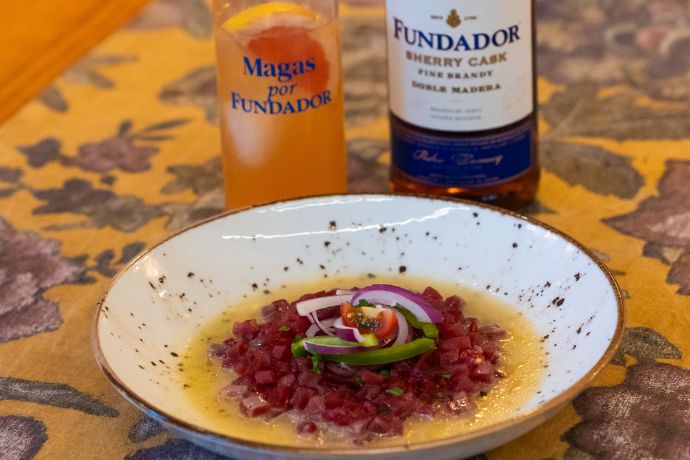
Ceviche + Magas by Fundador
Ceviche is an explosion of acidity, freshness and cold. The lime marinates the raw fish while the onion, cilantro and chili give it character. It needs a companion that can withstand that citrus punch without being overshadowed.
The answer is a cocktail: Magas by Fundador, a creation of the house that combines Brandy Fundador Doble Madera with citrus notes and a fresh nose that picks up and amplifies the acidity of the ceviche. The sensation in the mouth: the cold of the ceviche and the light creaminess of the cocktail intertwine, the lime of the dish finds its echo in the citrus of the cocktail, and the brandy provides a warm and aromatic background that rounds off the whole ensemble.
Why it works: the cold contrasts with the temperature of the cocktail; the acidity of the ceviche is balanced with the creaminess of the brandy; the citrus aromas reinforce each other.
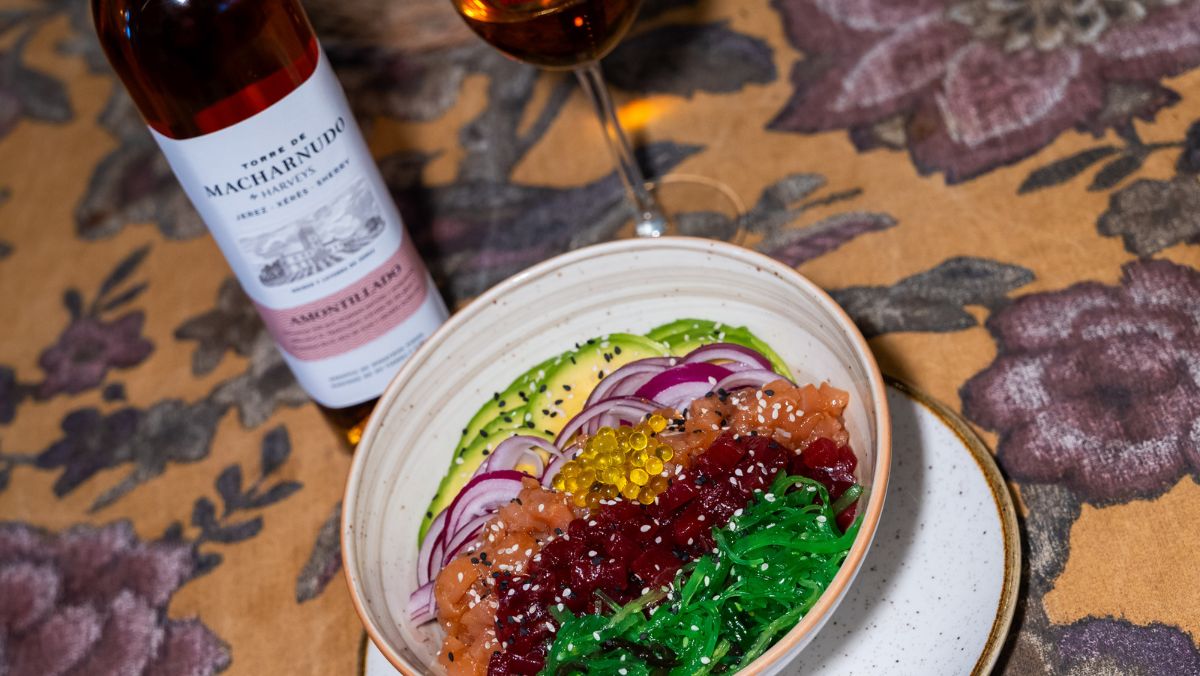
Poke bowl + Amontillado Torre de Macharnudo
Poke —originating from Hawaii— is built on layers: vinegared rice, raw fish (tuna, salmon), pickled vegetables, sesame, wakame seaweed and soy sauces. It is a dish of pure umami with sweet, salty and slightly acidic nuances.
This is where the wine Amontillado Torre de Macharnudo works magic. This sherry wine is born as Fino under a veil of flor and ends up aging oxidatively: the result is an amber wine, with notes of toasted hazelnut, noble wood and a salty tip. Served at 12-14 ºC, it cleans the fat from the fish, dialogues with the soy and sesame, and provides a complex aromatic layer that no young white can offer.
Why it works: the toasted aromas of the Amontillado align with the sesame and vinegared rice; its salinity enhances the umami of the tuna; its body withstands the intensity of the soy without fading.
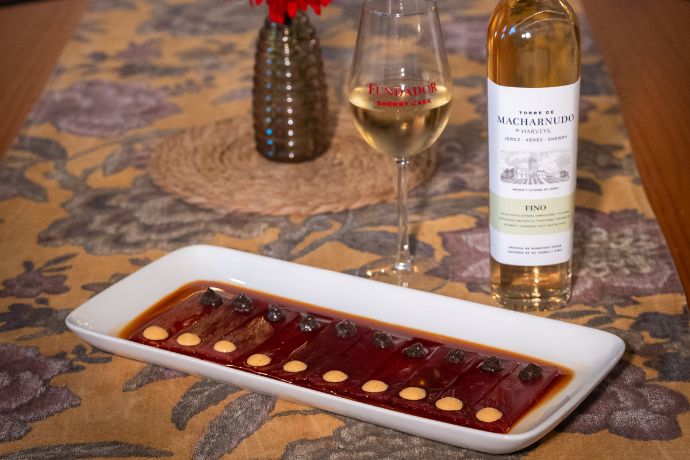
Red tuna tartare + Fundador Supremo 15
Red tuna tartare is pure product. Cubes of raw tuna, a minimal dressing (oil, soy, wasabi or mustard), avocado and sesame. The whole weight of the dish rests on the quality of the tuna —ideally from almadraba— and its buttery flavor.
The surprise combination: Fundador Supremo 15, a brandy from the premium range aged 15 years in Sherry Cask. Yes, you read it right: brandy with tartare. Served at room temperature (16-18 ºC), in a balloon glass, a small sip after each bite. The result is an explosion: the soft tannins of the brandy clean the fat from the tuna, the notes of dried fruit and vanilla from the aging enhance the natural sweetness of the fish, and the toasted sesame finds a perfect echo in the wood notes. It is the pairing that breaks all the manuals — and that’s precisely why it works.
Why it works:the brandy has enough aromatic complexity to dialogue with a product of such personality; the aging aromas in the cask connect with the sesame and avocado; the warmth of the alcohol counteracts the cold of the tartare.
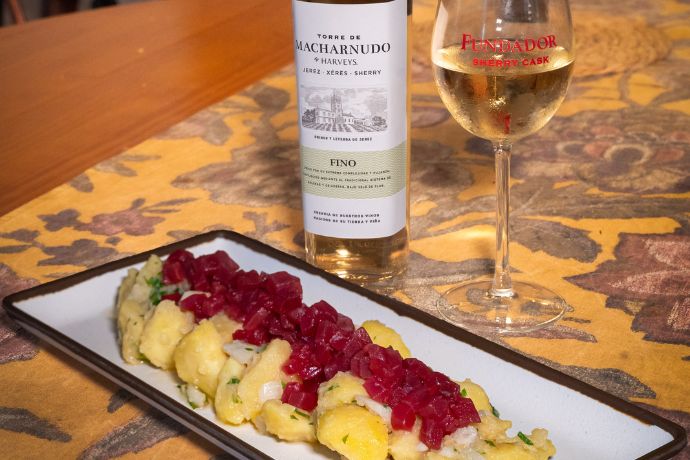
Fritters + Fino
We close with a nod to Andalusian tradition. The fritters —both the salty cod ones and the shrimp pancakes— are light, crispy and with a salty sea background. An appetizer designed to be eaten standing up, with a glass in the other hand.
The Fino is its quintessential companion. Served very cold (7-9 ºC), its almond character and its salty tip clean the fat from the batter and enhance the flavor of the seafood. It’s a classic Jerez pairing that remains in force for a reason: it works without possible discussion. If you have never tried this combination, this is the year.
Why it works: the salinity of the Fino aligns with that of the sea; its freshness cuts the fat from the frying; its almond aromas give an elegant background to the dish.
Experience it at Casa Fundador during the Gastronomic Capital 2026
These four pairings are not theory: you can enjoy them all at Casa Fundador, in the heart of the oldest winery in the Marco de Jerez. The summer menu has been designed precisely with this dialogue between contemporary fresh cuisine and the Jerez universe of wines and brandies in mind. Also, if you have any doubts about the best pairings for brandy, we leave you a detailed guide on how to make the most of it.
Fresh flavors are part of the cycle “12 ways to savor Jerez”, the special gastronomic year that Casa Fundador develops within the official programming of Jerez, Spanish Capital of Gastronomy 2026. Each month, a thematic chapter: tuna ronqueo, Jerez rice dishes, salted fish, ceviches, Iberian… A tour of the Cadiz pantry and its best pairings.
Frequently asked questions about pairing fresh flavors with Jerez wines
Can you drink brandy in summer?
Absolutely yes. Brandy served at room temperature (16-18 ºC) or incorporated into refreshing cocktails works perfectly in the warm months. The important thing is the serving temperature: never too cold (it would lose aromas) or hot. Premium brandies like Fundador Supremo 15 are especially enjoyed after a light meal of fish or fresh cuisine.
What wine to drink with ceviche?
Dry and acidic whites (Sauvignon Blanc, Albariño) are the most common choice, but Sherry wines offer much more interesting alternatives: a well-chilled Fino perfectly complements the citrus acidity of ceviche and its marine salinity. For a more sophisticated experience, try a brandy-based cocktail like Magas by Fundador.
What wine pairs with red tuna?
Red tuna calls for a partner with character. If the dish is raw (tartar, sashimi), an Amontillado or even a brandy served at room temperature are the best options. If the tuna is grilled, a Palo Cortado or an Oloroso are winning choices. Young whites usually fall short against the intensity of almadraba tuna.
Which Sherry wine pairs best with Asian cuisine?
Amontillado is the great wildcard for Asian cuisine: its oxidative notes dialogue with soy, sesame and miso sauces. For light sushi and sashimi, Fino works very well. For dishes with more fat (tempura, ramen), Palo Cortado is a surprising and winning choice.
At what temperature should wines and brandy be served in summer?
Fino: 7-9 ºC (very cold). Amontillado: 12-14 ºC (cool but not icy). Oloroso and Palo Cortado: 14-16 ºC (cellar temperature). Brandy: 16-18 ºC (slightly cool room temperature). In brandy cocktails, always with ice.
Because summer is not incompatible with good brandy or great Sherry wines. On the contrary: this is where they truly shine, with the fresh cuisine of always and the one yet to be discovered.
Related posts
This post was written by Almudena Alonso
Comments are closed here.